An Ode to the Toilet Experience in Japan
Restrooms in Japan reflect a commitment to advanced technology, personal comfort, and hygiene. At the center of this experience is the electronic toilet.
I created a visual journey of a woman’s experience using an electronic toilet in Japan. I’ve informed this experience based on academic studies (where possible), online research, and personal experience.
The Experience
Using the toilet is an inherently private act, even when it takes place in public spaces.
I grew up in North America where the experience of using public toilets is one that most would choose to forget. In fact, American women often worry about the cleanliness of public toilets, with many delaying toilet use or using alternative toileting postures like hovering or standing when using toilets outside of the home [1] [2].
On the contrary, the Japanese toilet experience prioritizes hygiene, comfort, and safety. In Japan, restrooms are a refuge for not only toilet breaks, but also for brushing teeth after meals, seeking privacy, and freshening up. Rather than being treated as marginal or purely utilitarian spaces, they are respected public environments, equipped with technologies that serve everyday human needs.
TOTO, the technology company synonymous with the “Japanese toilet”, describes the ideal restroom experience as one that provides users with peace of mind [3]TOTO Museum, Display, Kitakyushu Japan. They have helped shape the modern restroom by designing experiences centered on human comfort, hygiene, and dignity, extending beyond the toilet itself to encompass the entire restroom environment.
This experience also depends on users sharing responsibility for maintaining a clean and functional restroom environment by leaving the space as they found it. This self-sustaining system is supported by a set of unwritten social norms. For example, only restroom-related waste, such as toilet paper and menstrual products, should be disposed of in restroom bins, while personal waste, like food wrappers and drink containers, should be discarded elsewhere.
Engaging the Senses
Using a restroom engages all of the senses:
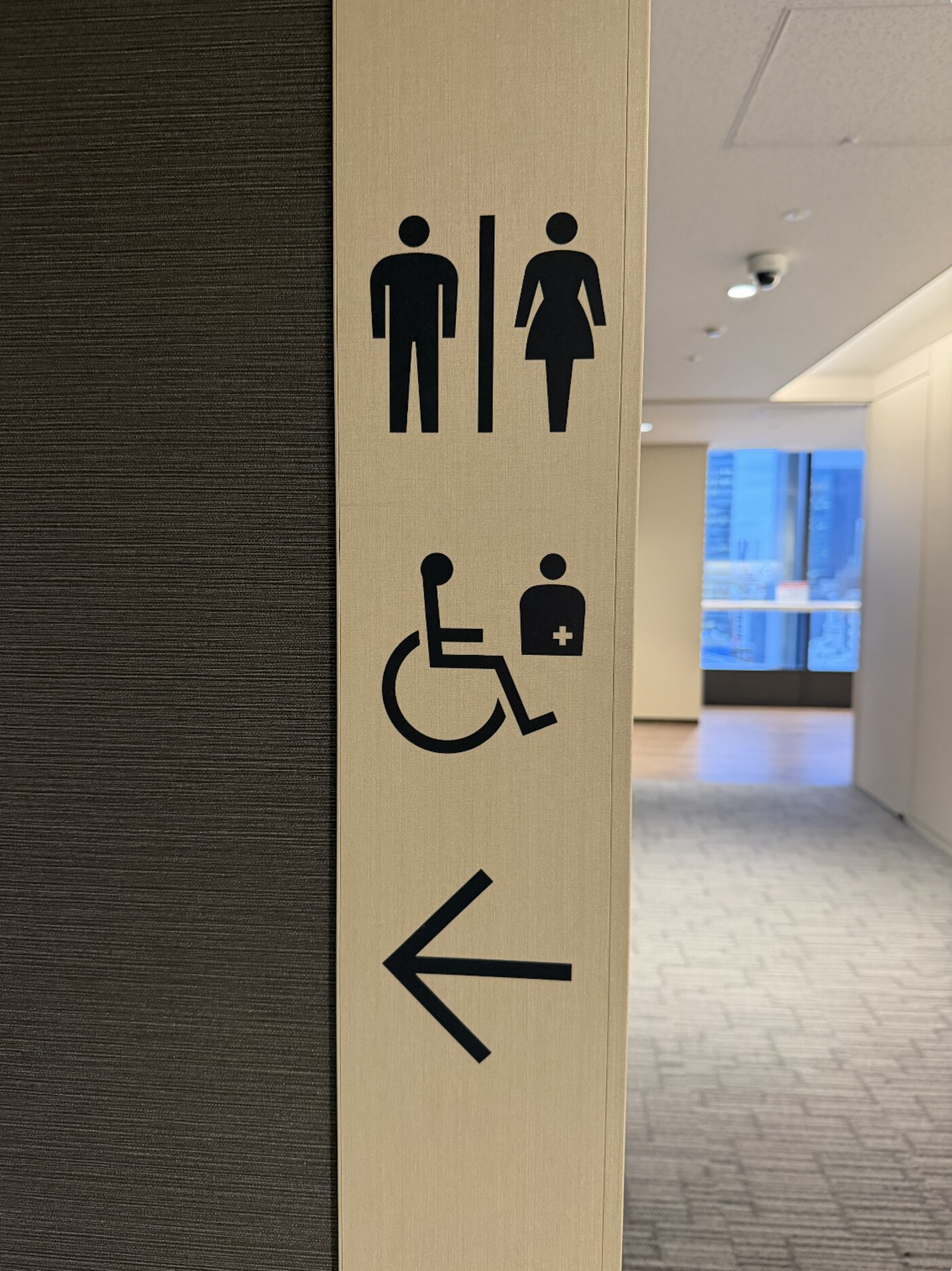
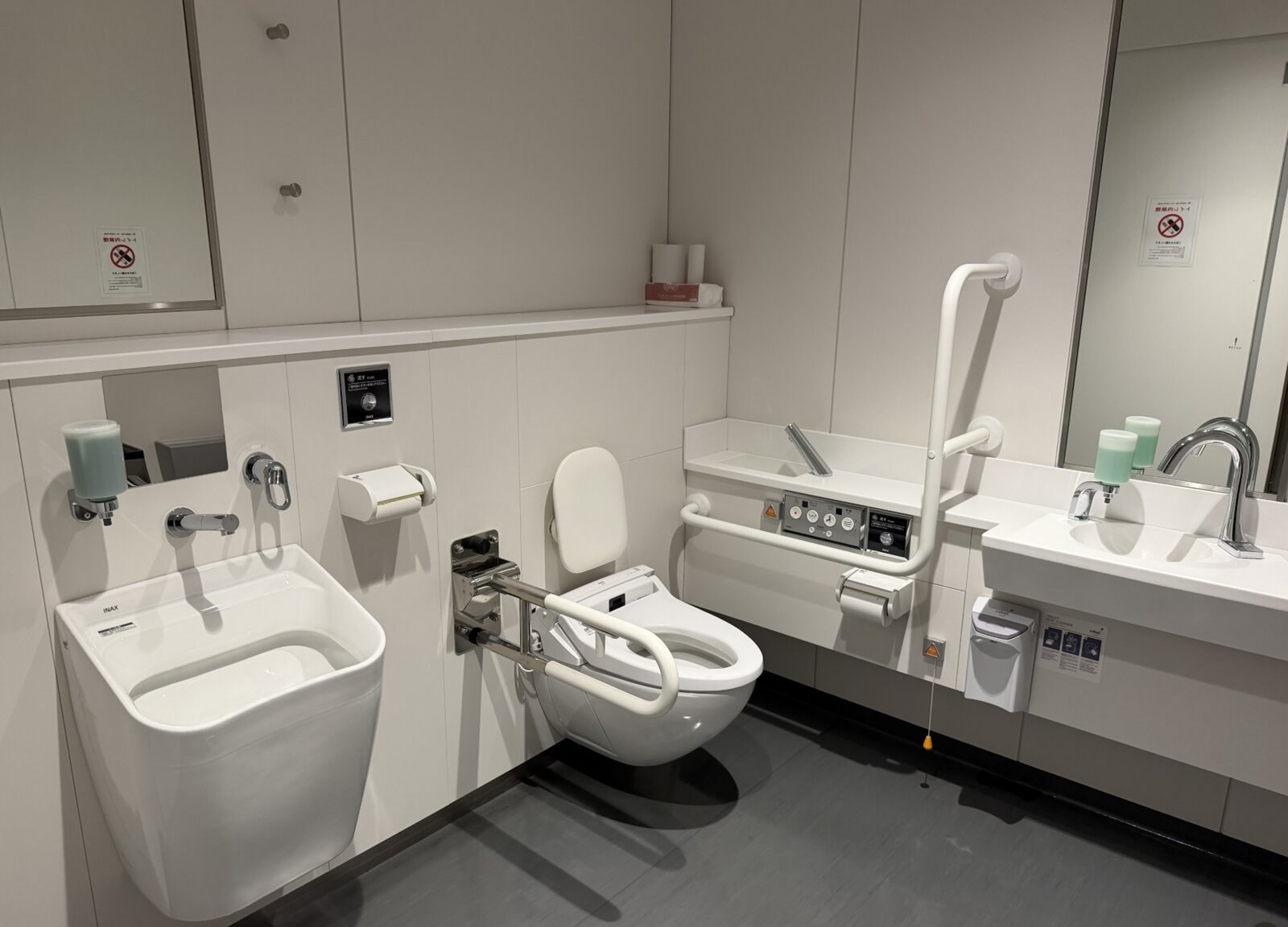
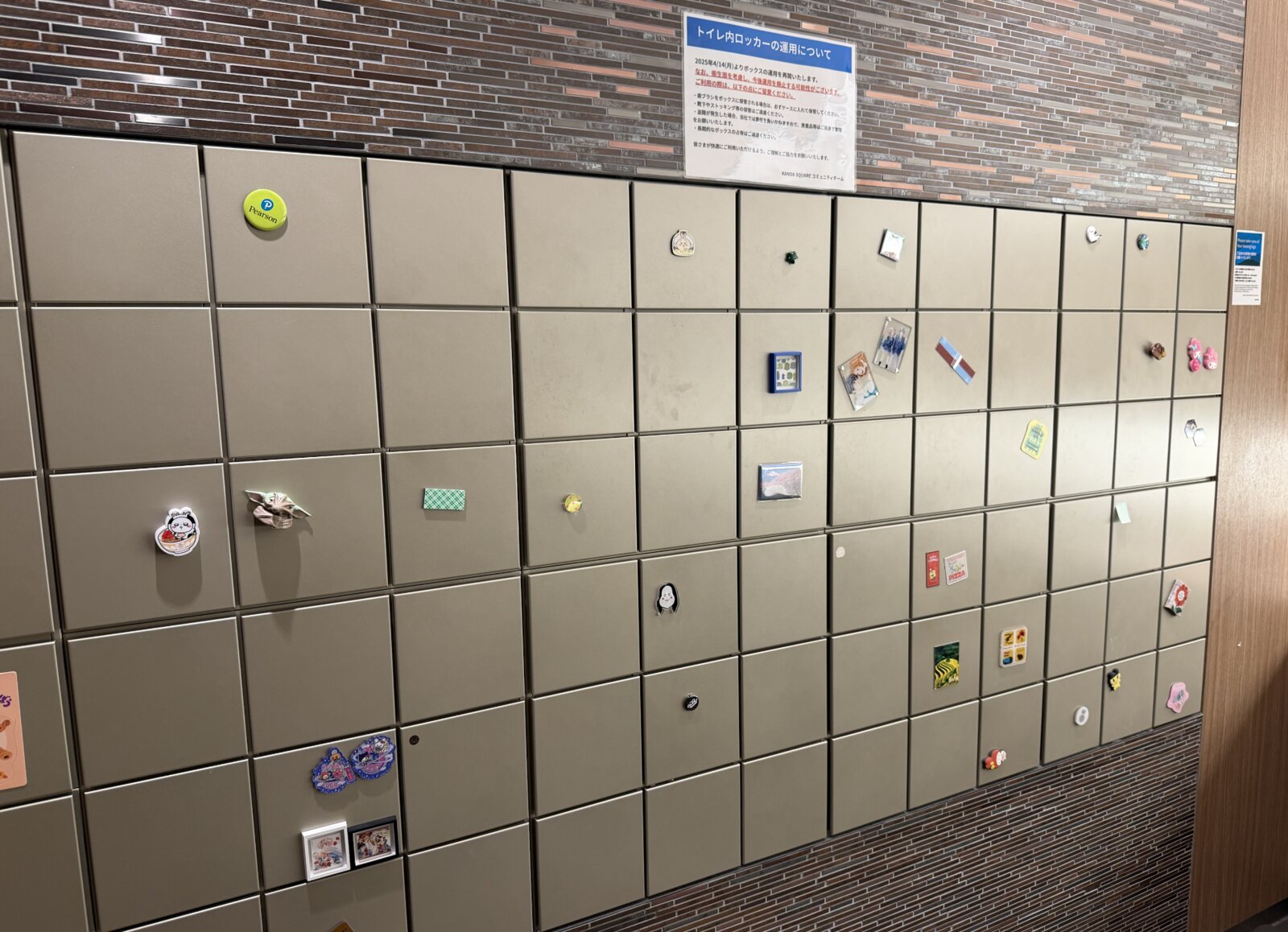
From left to right: Restroom signage; Accessible restroom with an Ostomate toilet; Personal cupboards for belongings in a women’s restroom
Technologically mediated sounds overpower human-generated sounds.
Here are typical commands that are often found in public electronic toilets, that generate many of the sounds heard in the restroom:
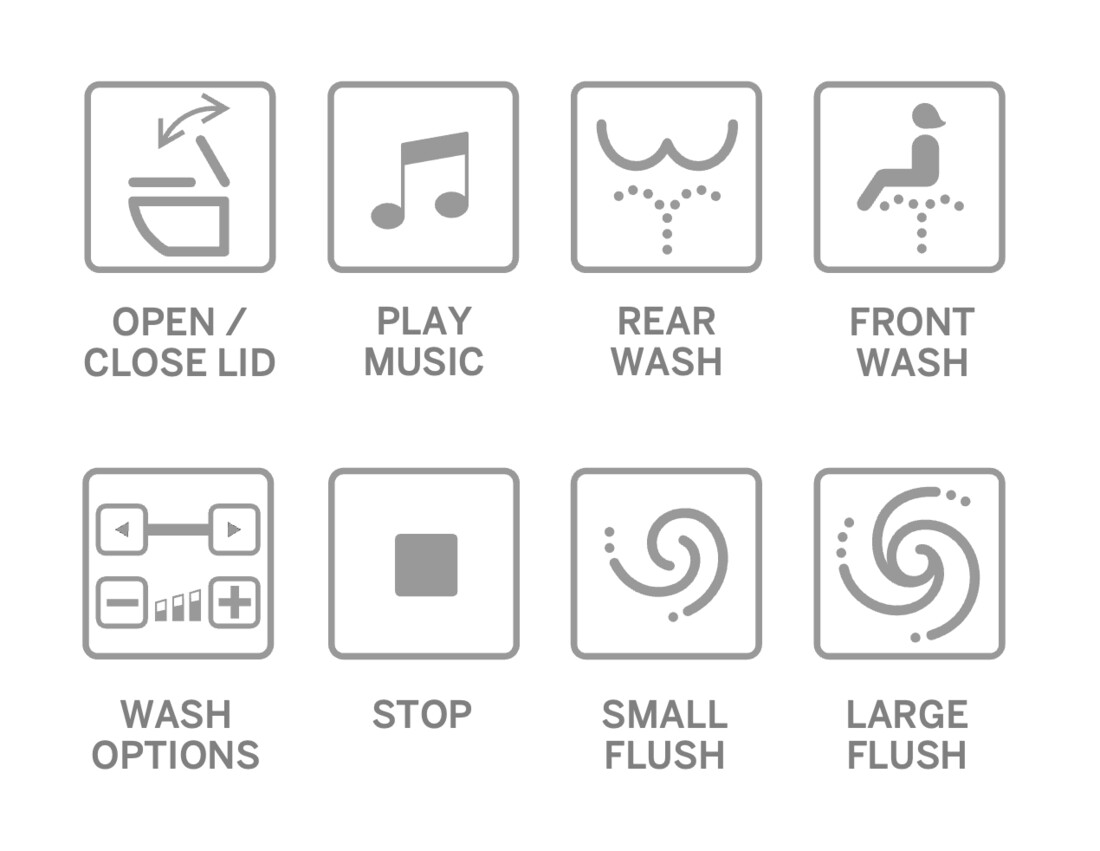
This journey aims to follow a woman entering and using the toilet in a public restroom in Japan, and account for many of the sensory experiences above. I chose to focus on the user’s behavior in response to the various technologies they encounter (locks, toilet, sink, etc.) and the unique sounds that dominate the end-to-end experience.
What We Know (And Don’t Know)
Humans use restrooms multiple times each day; they are the epicenter of personal health management. And yet there is surprisingly little peer-reviewed research on how people actually experience and use restrooms in everyday life. Existing studies largely examine the relationship between toileting behaviors and specific health conditions (e.g., urinary tract infections, hemorrhoids), while personal experiences and everyday practices are primarily documented through blogs, online forums, and other informal sources. Information on electronic toilets themselves tends to focus on the usability and management of the technology itself (like this) rather than on the lived human experience of using these products.
This gap in understanding leaves many practical questions unanswered for universal restroom behaviors—especially women’s toileting behaviors. For example:
- How long does a person typically spend sitting on the toilet?
- How often do people use a public bidet to wash their genitals?
- When using a bidet, do women typically wash their vulva or anus first?
- How often do users clean the toilet seat before use?
- Do women sit on the toilet to change their menstrual products?
Given the lack of robust research, I created this journey using my best judgement with research I could find, mixed with lived experiences of others and myself. My assumptions and comments are below.
Assumptions
- The user is a female adult who can physically access/use a typical public bathroom in Japan. The journey starts when the user enters the stall and ends when the user exits the stall. The public bathroom has two or more toilet stalls. The user-toilet experience is the epicenter of the journey.
- The toilet employs a range of functions commonly found in electronic bidet toilets including: lid open/close, privacy sounds, wash functions (front spray for females and rear spray), flush (large or small), and stop. In the journey, the user is activating these functions by pressing manual control buttons, however, in many cases these functions may be automated.
- Like many parts of Asia, 90% of Japanese women prefer sanitary napkins or pads over tampons or menstrual cups [4]. For the journey, we focus on usage of disposal bins in the stall for primarily disposing of used pads. This is an optional step in the journey, depending on whether the user is menstruating.
- Audio gathered and information collected to inform this journey are from a collection of public bathrooms, largely in professional offices, across mid- to large-sized cities in Japan. No specific technology brands are represented in this journey.
- Comprehensive research on electronic toilet and bidet usage is limited, particularly when it comes to women’s experiences. It’s important not to assume that behaviors and expectations are consistent across different technologies, cultures, or regions. The insights and research presented here reflect broad behavioral patterns and are grounded primarily in a North American perspective.
Comments
Time Spent on the Toilet
The amount of time a woman spends on the toilet (urinating, bowel movement, etc.) is understudied. One study found women spend an average of 90 seconds on the toilet compared to 60 seconds for men [5], while another found the average bowel movement took 5 to 6 minutes for adult women [6]. However, the data is limited and unclear if this is for total time spent in the stall, the bathroom, or on the toilet itself. For the journey, I assumed 90 seconds was average toilet time for urination and ~5 minutes was average for bowel movements, and that overall the typical time spent on toilet is 5 minutes or less.
Rear Sprays as Unhygienic for Women
Questions about whether rear sprays are safe for women are debated online. Some users claim they developed urinary tract infections (UTIs) associated with regular bidet use, while others report no issues despite years of use. There is also concern that rear-spray water could transfer bacteria to the vulva through splash back or runoff from the anus. However, others argue that because the rear spray is directed downward into the toilet bowl, bacterial transfer is unlikely [7] [8] [9].
To Wipe or Not to Wipe?
While one commonly cited benefit of bidet use is reduced toilet paper consumption, some users report wiping with toilet paper after urination or defecation before using the bidet (spray) function. Users often discuss the value of wiping following a bowel movement [10] [11] [12]. Some users also describe using toilet paper or reusable towels to dry off following the bidet wash [13].