Design Thinking for Partnership Programs
“Design Thinking” is a human-centred approach to problem solving that is anchored in human needs, rapid prototyping, and creative ideation. In practice, I’ve applied design thinking to a broad range of creative challenges, including product innovation, service design, and the development of strategic partnerships. In this post I’ll dive into two Design Thinking frameworks that I’ve adapted to my work in building revenue generating partnership programs across the tech, AI, and aerospace industries: (1) a ‘Partnerships Framework’ for building partnerships from the ground up, and (2) ‘Desirable, Feasible, Viable’ decision-making criteria to identify the most promising partnership opportunities.
Designing Partnerships
Partnerships can be transformative to a business, especially for early stage startups seeking opportunities for growth. Partners can unlock new market segments, identify new business models and use cases, open up new revenue channels, amplify brand visibility, elevate customer experience, and fill existing product or service gaps. At the same time, partnerships are often underestimated as a source of serious revenue generation, namely because they are difficult to effectively execute and grow.
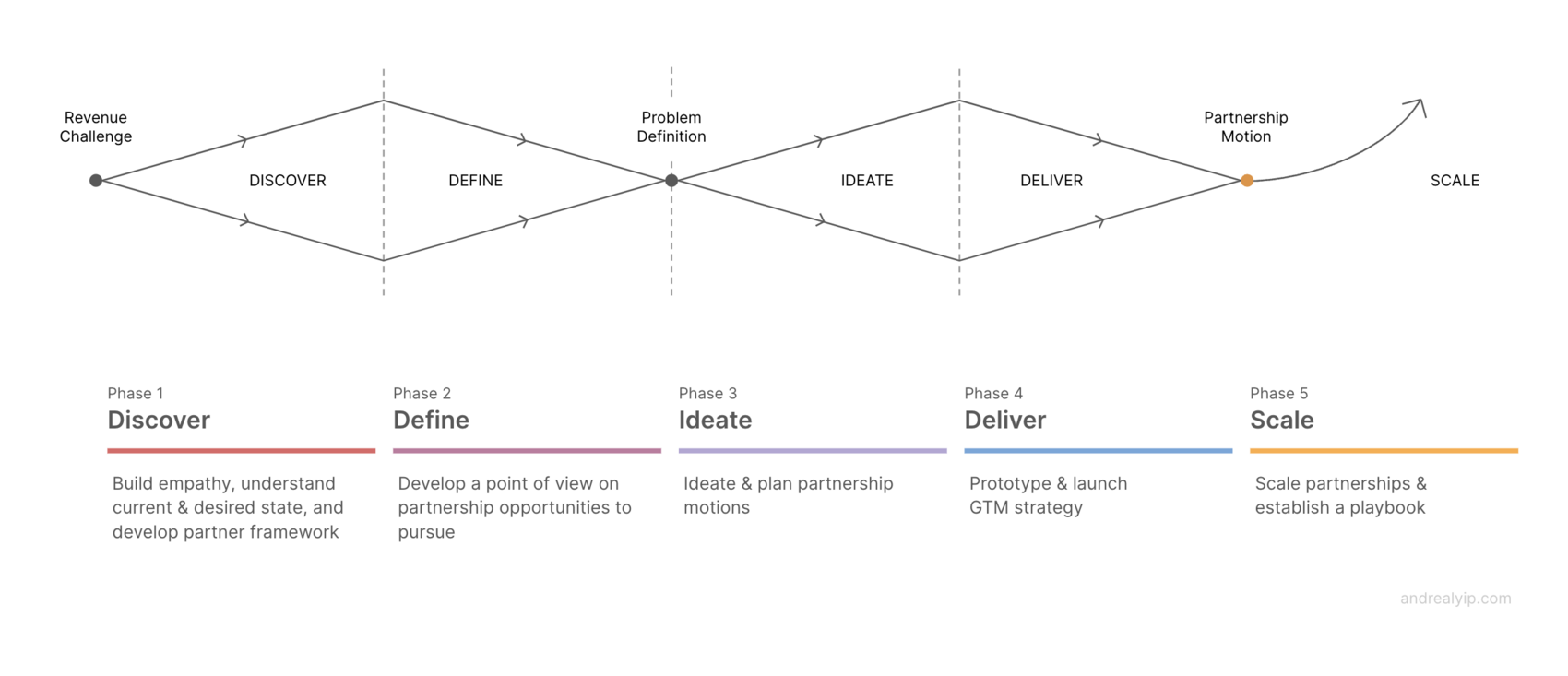
Design Thinking offers an approach for building partnerships. We start with a revenue challenge (e.g., “how might we increase revenue through strategic partnerships?”) and enter discovery to understand the current and desired state of partnerships. With this context in mind, we develop a point of view on what types of partnership opportunities to pursue and identify potential partners to work with. Then we ideate different ways to work with our prospective partners, develop a go-to-market strategy, and prototype and launch our plan. The most successful partnership motions are scaled into predictable and repeatable strategies.
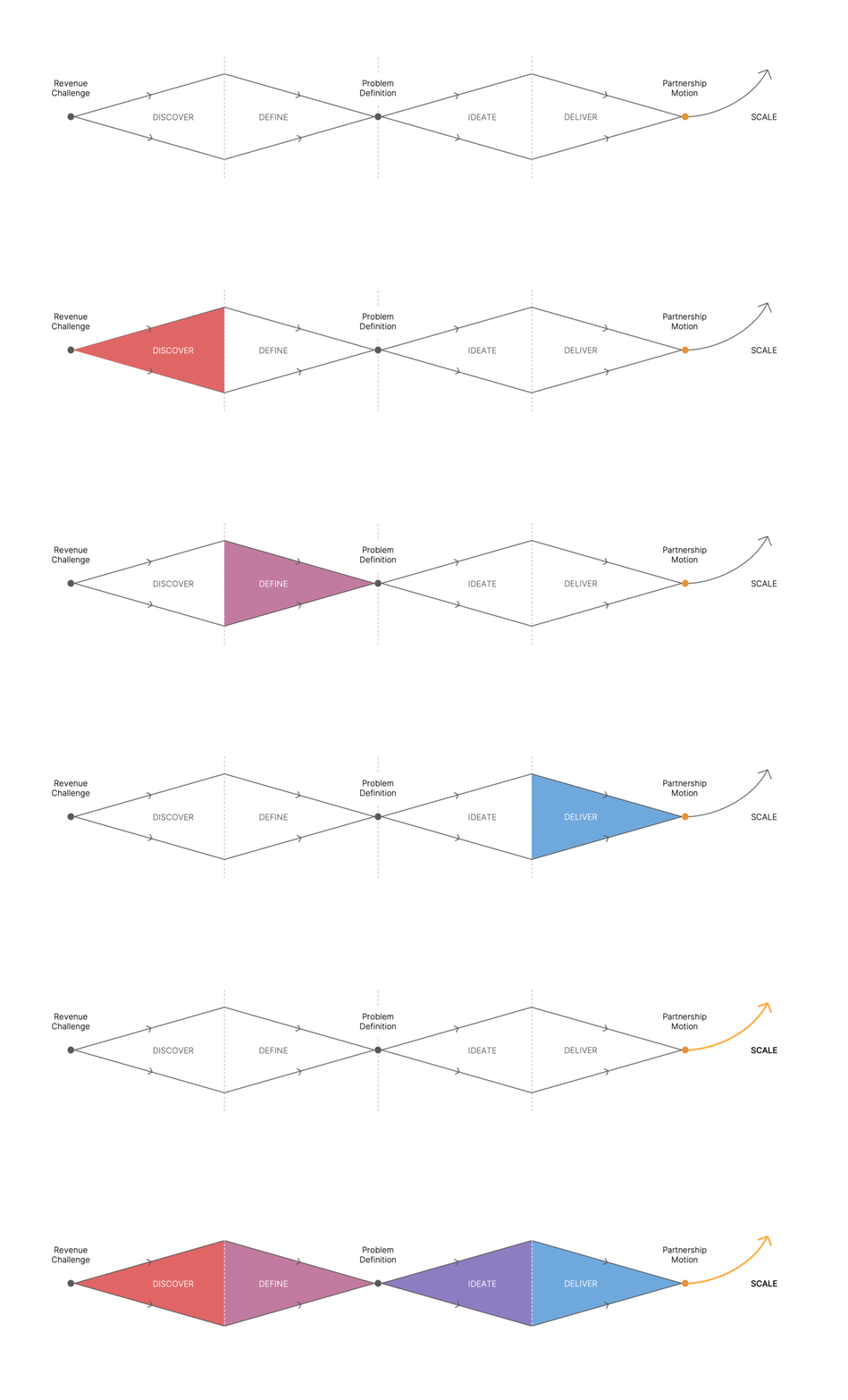
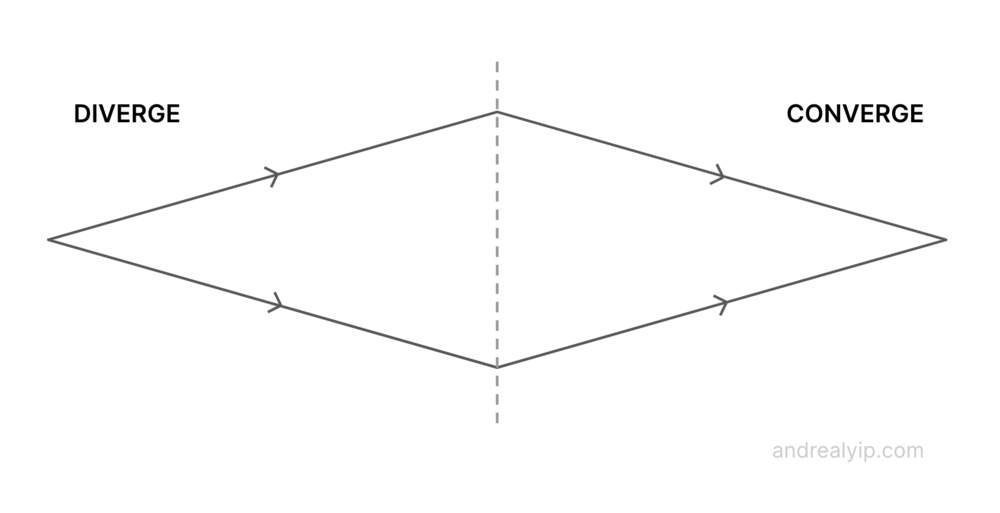
The Partnership Framework I have developed is adapted from the Double Diamond model of design thinking. Each phase of the double diamond is facilitated by two types of thinking:
- Divergent: Creating choices through ideation and exploration of possibilities
- Convergent: Making choices through analysis, evaluation, filters, clarification, and by modifying ideas
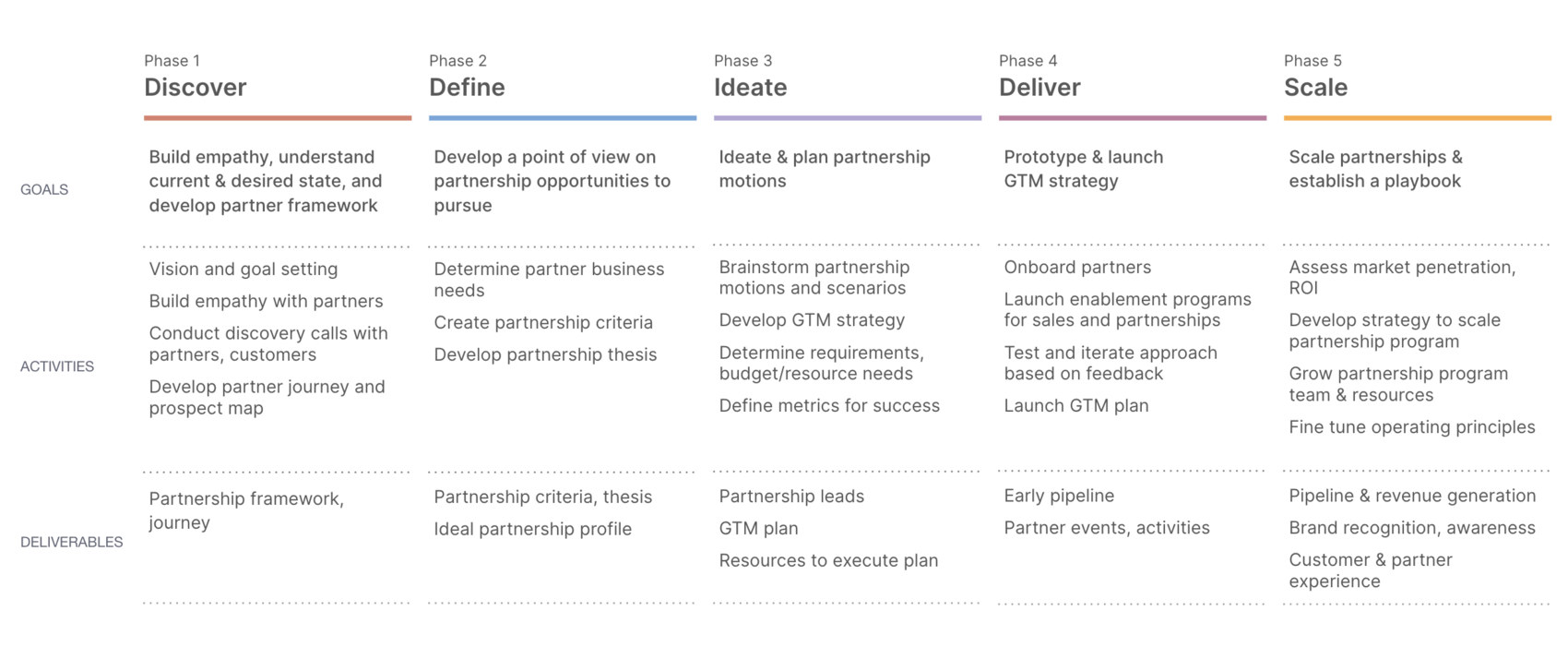
Here are the 5 phases of the framework broken down into greater detail:
Desirable, Feasible, Viable: The Ideal Partnership Motion
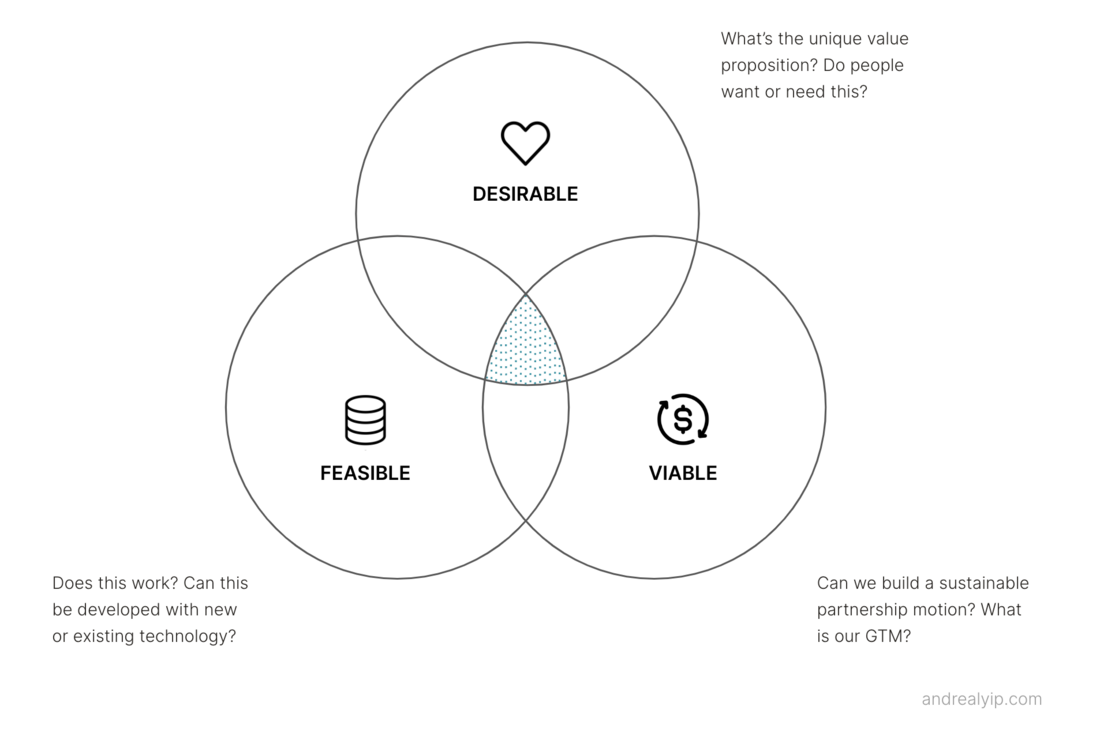
‘Desirable, Feasible, Viable’ is a design thinking framework used as criteria for identifying innovative solutions… and it’s one that is particularly applicable to partnerships. Here’s how we can use this framework to identify promising partnership motions to test and scale:
Ask yourself, is our partnership motion…
- Desirable? It offers something that people — your business leaders, partners, customers — need or deeply want
- Feasible? It leverages the capabilities and strengths of yours and your partner’s business, and is technologically possible
- Viable? There is a clear business model, it adds economic value, and it contributes to the growth of the business
✦ ✦ ✦
The Partnership Framework and Desirable, Feasible, & Viable criteria are useful Design Thinking tools that can help revenue leaders creatively co-design new partnership motions. Let me know how design thinking has informed your own revenue strategy.